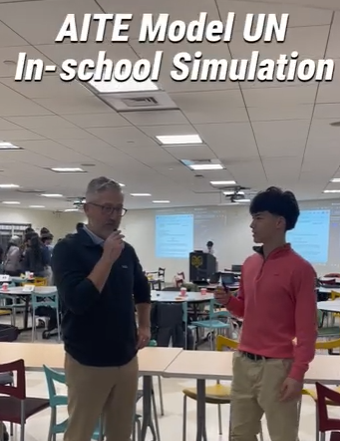
Students at the Academy of Information Technology & Engineering (AITE) recently stepped into the roles of Supreme Court justices, attorneys, and journalists to tackle one of the most debated constitutional questions: Does the 14th Amendment guarantee citizenship to nearly all children born in the United States?
The simulation, organized by Mr. Morest’s AP/UConn ECE American Government and Politics class, took place just one day before the U.S. Supreme Court was scheduled to hear arguments in a similar real-world case. The event was structured as a moot Supreme Court hearing, giving students the opportunity to engage directly with constitutional law and judicial procedures.
During the hearing, students presented arguments on both sides of the issue. Attorneys were given five minutes for opening statements, followed by twenty minutes of questioning from student justices. The session concluded with a rebuttal from the petitioner’s side, which also included a cross-examination led by the justices.
The central issue focused on the interpretation of the 14th Amendment, ratified in 1868, which originally granted citizenship to formerly enslaved people and established equal protection under the law. Over time, its scope has been understood to extend to most individuals born or naturalized in the United States. Students explored whether this long-standing interpretation should remain or be reconsidered.
Participants said the experience was both challenging and rewarding. Many students noted that preparing for their roles required extensive research, critical thinking, and the ability to respond under pressure during questioning.
“It felt like a real Supreme Court argument,” one student said. “You had to know your case inside and out because the justices could question anything.”
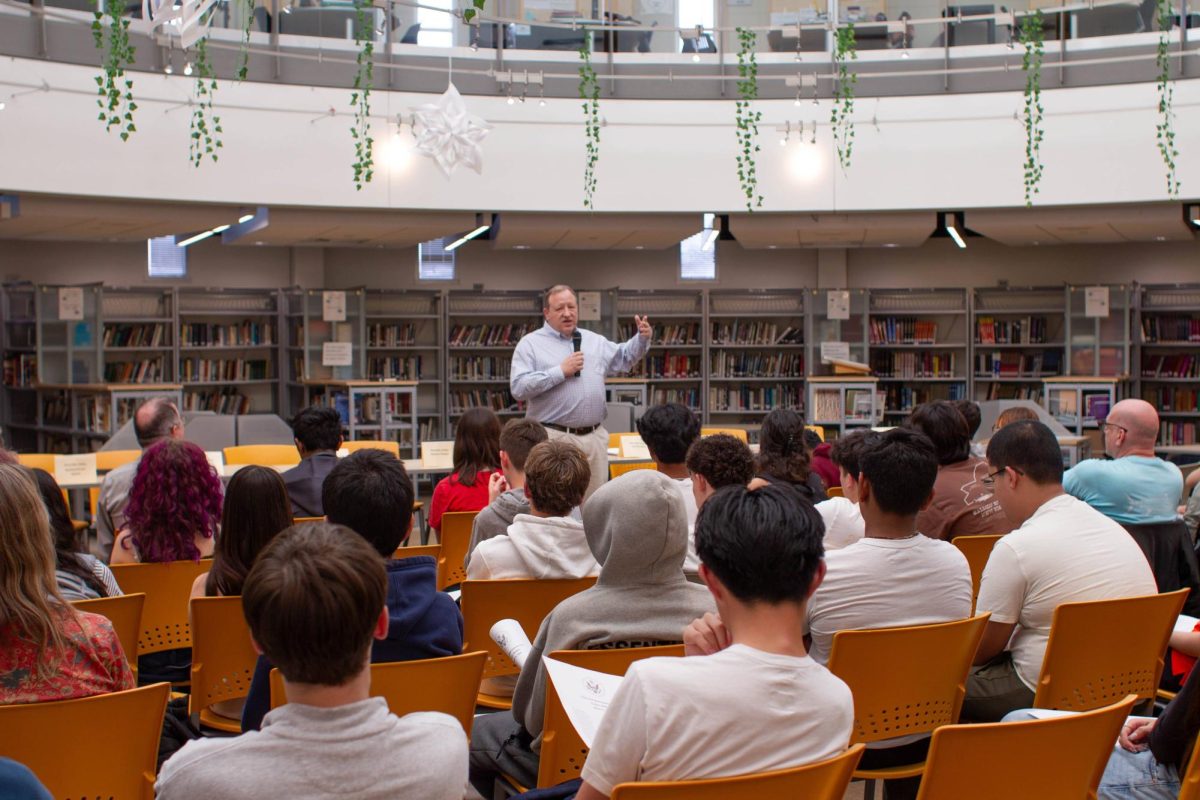
The event drew a strong audience, including students, faculty, parents, and members of the Board of Education. Attendees praised the participants for their professionalism and depth of understanding.
Overall, the moot court hearing was considered a success, offering students a hands-on way to explore constitutional issues while developing public speaking and analytical skills. Events like this highlight the value of experiential learning and demonstrate how classrooms can bring complex legal debates to life.